Staying comfortable in warm weather does not always require a large room fan or a permanent cooling system. There are many situations where a person simply needs a small amount of moving air nearby: walking outdoors, waiting for transportation, working at a desk, attending an event, traveling, exercising, or relaxing at home.
Portable handheld fans are designed for these everyday situations. Their main purpose is to provide personal airflow in a compact form that can be carried from one location to another. Unlike a traditional pedestal or table fan, a handheld model is designed around mobility and close-range use.
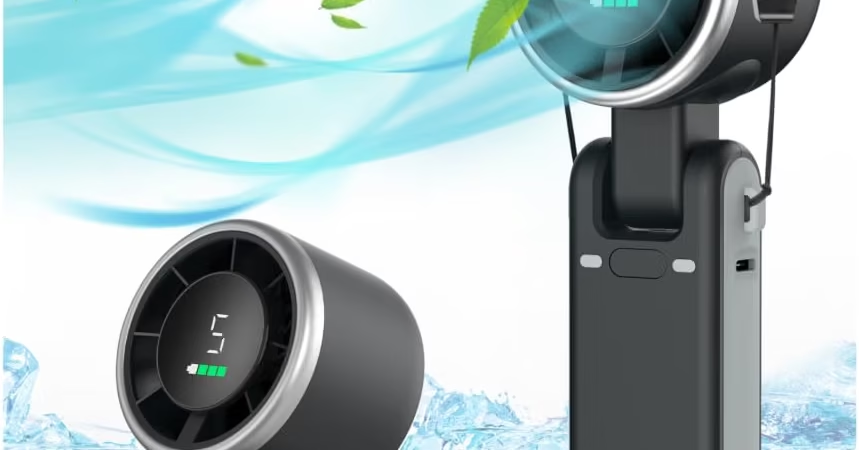
The PlayHot Portable Handheld Turbo Fan is presented as a compact personal cooling accessory intended for travel and everyday use. Its portable design makes it relevant to people looking for an easily carried source of airflow, while its rechargeable format is intended to reduce reliance on disposable batteries during normal use.
A small fan such as this does not replace an air conditioner or a full-size room fan. Instead, it serves a different purpose. It can direct airflow toward one person rather than attempting to circulate air throughout an entire room.
That distinction is important when considering what a portable fan can realistically do.
This guide explores the general characteristics and practical applications of the PlayHot portable handheld fan, how this type of fan can fit into different routines, what to consider before using one, and how handheld fans compare with other personal cooling options.
What Is a Portable Handheld Fan?
A portable handheld fan is a compact battery-powered device designed to produce a stream of moving air that can be directed toward the user.
Traditional household fans are usually positioned on a desk, floor, wall, or ceiling. A handheld fan changes that arrangement by allowing the user to hold and aim the device.
This makes it useful when the person is moving around or when there is no convenient surface on which to place a conventional fan.
A rechargeable handheld fan generally contains a small electric motor, fan blades or an enclosed fan mechanism, a rechargeable battery, controls, and a charging connection.
The PlayHot model is marketed as a portable turbo fan, with its compact format intended for personal cooling and travel.
The most important concept is personal airflow.
Rather than cooling the entire surrounding environment, a handheld fan moves air across the user’s skin. This airflow can increase the evaporation of perspiration, which can make the user feel more comfortable in warm conditions.
The surrounding air itself is not necessarily being cooled.
Key Features
Portable Handheld Design
Portability is central to this category of fan.
A handheld fan can be carried in a bag, held while walking, or kept nearby at a desk.
This flexibility makes it different from larger fans that need to remain in one location.
A portable fan can follow the user throughout the day.
For example, someone might use it at a desk in the morning, take it outside during lunch, and carry it while traveling later in the day.
The usefulness of this design comes from convenience rather than room-scale airflow.
Turbo-Style Airflow
The product is described as a turbo fan, indicating a design focused on producing a concentrated stream of air from a relatively compact device.
The actual strength of the airflow can depend on the fan’s operating mode, battery level, surrounding conditions, and other design characteristics.
Users should therefore think of the device as a source of personal airflow rather than assuming that a small fan can produce the same circulation pattern as a larger household fan.
A concentrated stream can be useful when the fan is pointed directly toward the face, neck, hands, or upper body.
Rechargeable Operation
The product is described as rechargeable.
Rechargeable operation can be useful for portable electronics because it reduces the need to carry disposable batteries.
The fan can be charged between uses and then carried for later use.
This approach is particularly convenient for travel.
Instead of purchasing replacement batteries while away from home, the user can recharge the device when an appropriate power source is available.
Battery-operated devices should still be charged using the manufacturer’s recommended method and handled according to the provided instructions.
Personal Cooling
The fan is intended primarily for personal cooling.
This means its airflow is directed toward an individual rather than an entire room.
Personal cooling can be useful when the surrounding environment is warm but installing or carrying a larger fan is impractical.
For example, a person sitting at an outdoor event may only need airflow around their own seating area.
Travel-Oriented Design
The product is marketed as a travel-friendly accessory.
Travel introduces many situations where a compact fan can be useful.
Air conditioning may not always be available or may not be set to a person’s preferred temperature.
A handheld fan can provide another way to create localized airflow.
It can be used during road trips, waiting periods, outdoor activities, hotel stays, commuting, and other situations where portability matters.
Gift-Oriented Use
The product is also marketed toward gifting for women and men.
Portable cooling accessories can fit into several gift categories because they are practical rather than tied to one particular hobby.
A compact rechargeable fan can be relevant to someone who spends time outdoors, travels frequently, works in warm environments, attends summer events, or simply prefers having personal airflow available.
The usefulness of a gift still depends on the recipient’s habits and needs.
How a Handheld Fan Creates a Cooling Sensation
It is useful to understand the difference between moving air and actually lowering air temperature.
A portable fan generally does not function like an air conditioner.
Instead, it moves air across the body.
When warm air moves across exposed skin, moisture on the skin can evaporate more readily. Evaporation removes heat from the skin’s surface, which can contribute to a cooling sensation.
This is why a fan can feel refreshing even when the room temperature has not changed.
The effect can be particularly noticeable when the user is warm or perspiring.
However, a fan should not be considered a substitute for appropriate precautions during dangerous heat conditions.
When temperatures are extremely high, people should follow appropriate heat-safety guidance, stay hydrated, seek cooler environments when necessary, and pay attention to symptoms of heat illness.
How It Can Be Used
At a Home Office Desk
A handheld fan can be useful while working at a desk.
Instead of cooling an entire room, the user can position the airflow toward themselves.
This can be useful when a room is warm but the user does not want to operate a large fan continuously.
The compact design also means the fan can be moved when the workspace changes.
During Commuting
Public transportation, waiting areas, and outdoor stops can become uncomfortable during warm weather.
A portable fan can provide personal airflow while waiting for a bus, train, taxi, or other transportation.
Its portability allows the device to remain in a bag until needed.
Outdoor Events
Summer events can involve long periods of sitting or standing outdoors.
Concerts, festivals, sporting events, markets, fairs, and community gatherings can become warm, particularly when there is limited natural airflow.
A handheld fan can direct air toward the user during these situations.
Event rules should always be checked because some venues restrict the size or type of electronic devices that can be brought inside.
Travel
Travel is one of the more obvious applications.
A small fan can be carried in luggage or a personal bag and used when conditions become warm.
It may be useful in hotel rooms, waiting areas, outdoor attractions, and transportation settings.
The rechargeable format can also simplify packing because there is no need to carry a supply of disposable batteries.
During Outdoor Walks
People who walk for exercise or transportation may appreciate portable airflow during warm weather.
A handheld fan can be used during breaks or while walking at a comfortable pace.
When exercising, however, users should be aware that feeling cooler from airflow does not necessarily mean the body’s core temperature has returned to a safe level.
The fan should be considered a comfort accessory, not a substitute for heat-safety practices.
At the Gym
A compact fan can provide additional airflow during workouts.
Some gyms already have strong ventilation and large fans, while others may have areas with less direct airflow.
A personal fan can be directed toward the user during rest periods or lower-intensity activities.
Users should avoid allowing the device to interfere with exercise equipment or other people.
At a Picnic
Outdoor meals can become uncomfortable when temperatures rise.
A handheld fan can provide localized airflow without requiring access to electrical outlets.
Because it is rechargeable, the user can prepare the fan before leaving home and carry it with other picnic accessories.
At a Beach
A portable fan can be used near the beach to provide personal airflow.
However, sand and moisture deserve special consideration.
Fine particles can enter mechanical openings, while water and electronics generally do not mix well unless the product is specifically designed for water exposure.
Users should keep the fan away from splashing water and avoid placing it directly in sand.
During Camping
A rechargeable fan can be useful in tents, campsites, and other outdoor environments.
The fan can help circulate air around a person’s immediate area.
However, battery life becomes especially important when camping because access to electrical outlets may be limited.
Users should charge the fan fully before leaving and consider their expected usage time.
In a Dorm Room
Students living in dormitories may have limited personal space.
A handheld fan takes up little room compared with a larger floor or pedestal fan.
It can be used while studying, relaxing, or preparing for sleep.
Dormitory rules should be checked before using electrical accessories.
In the Kitchen
Cooking can generate heat, particularly around ovens and stovetops.
A personal fan can provide airflow when someone is working in the kitchen.
It should be positioned safely away from open flames, hot surfaces, grease, and liquids.
A portable fan should never be placed where it could fall into a sink or interfere with cooking equipment.
While Getting Ready
A small fan can be useful while applying makeup, styling hair, getting dressed, or preparing for an event in a warm room.
Because the airflow can be directed precisely, the user does not need to cool the entire room to obtain some personal relief from heat.
Who It May Be Suitable For
Travelers
People who frequently travel may appreciate compact accessories that can serve a practical purpose without taking much luggage space.
Students
Students can use a portable fan in dormitories, libraries where permitted, outdoor study spaces, or while commuting.
Office Workers
People working in warm offices or home workspaces can use personal airflow without necessarily needing a large room fan.
Outdoor Enthusiasts
Hikers, campers, walkers, and people attending outdoor events may find a rechargeable personal fan useful during warm conditions.
Commuters
Anyone who spends time waiting outdoors or traveling through warm environments can carry a portable fan for personal airflow.
Event Attendees
A handheld fan can be useful at outdoor gatherings, sporting events, festivals, and similar activities, subject to venue rules.
People Looking for Practical Gifts
A portable rechargeable fan can be considered for someone who travels, spends time outdoors, works in warm environments, or appreciates compact everyday accessories.
Important Things to Consider
Battery Life
Battery performance is one of the most important considerations for any rechargeable fan.
Actual operating time can vary depending on the selected fan speed and other conditions.
Higher airflow settings generally require more energy than lower settings.
Users who expect to use the fan throughout an entire day should consider how often they will have access to a charging source.
It is also useful to charge the fan before leaving home rather than assuming that the battery will already have enough power.
Charging
Because the fan is rechargeable, the charging process becomes part of normal ownership.
Use the charging equipment and method recommended by the manufacturer.
Avoid charging electronic devices in environments where they can become excessively hot, wet, or damaged.
If the battery, charging port, or cable shows signs of physical damage, discontinue use until the issue has been properly addressed.
Airflow vs. Room Cooling
A small handheld fan should not be expected to lower the temperature of an entire room.
Its purpose is localized airflow.
This distinction can help set realistic expectations.
A large room with several people may benefit more from a full-size fan, ventilation, or air-conditioning system.
A handheld fan is more appropriate when one person needs direct airflow.
Noise
Small fans can produce audible motor and airflow noise.
The amount of noise can vary depending on operating speed and fan design.
For activities such as recording audio, attending meetings, or sleeping, users should consider whether fan noise could be distracting.
If the fan is being used near a microphone, the airflow and motor sound may be captured by the recording.
Heat and Sun Exposure
Portable fans can make a person feel cooler without changing the actual ambient temperature.
This is important during hot weather.
If the surrounding temperature is dangerously high, airflow alone is not sufficient protection against heat-related illness.
Move to a cooler location, drink appropriate fluids, reduce physical exertion, and follow recognized heat-safety recommendations when conditions become extreme.
Dust and Debris
Portable fans can encounter dust, hair, lint, sand, and other particles.
Keep the device reasonably clean and follow the manufacturer’s instructions for maintenance.
Do not insert fingers, tools, or other objects into the fan mechanism.
If the fan has an intake or exhaust area, keeping those openings free from obstruction can help it operate normally.
Water Exposure
Unless the product is specifically rated for water resistance, users should treat it as an electronic device that needs protection from water.
Avoid using it in heavy rain or placing it beside sinks, pools, showers, or other wet environments.
Even small amounts of liquid can damage electronics.
Safety Around Children
A portable fan should be used responsibly around children.
Small electronic accessories can contain components that should not be treated as toys.
Keep charging cables away from areas where they could create a trip or entanglement hazard.
Follow the manufacturer’s safety instructions regarding operation and charging.
Carrying the Fan
A handheld fan is designed to be portable, but portability also means it can be dropped.
Store it securely when not being used.
Avoid placing heavy objects on top of it inside a bag.
If the device is dropped and develops unusual noises, cracks, overheating, or other problems, inspect it before continued use.
Portable Fan vs. Traditional Desk Fan
A desk fan generally stays in one location.
Its larger size can allow it to circulate more air around a workspace.
A handheld fan offers a different type of convenience.
It can be moved easily and directed toward a particular person.
A desk fan can therefore be more practical for continuous workspace cooling, while a handheld model can be useful when mobility is important.
Neither category serves exactly the same purpose.
Portable Fan vs. Floor Fan
Floor fans are designed to move substantially more air around a room or larger area.
They are useful for home ventilation and room-level airflow.
The trade-off is size.
A floor fan is not something most people carry while commuting or traveling.
A handheld fan is much easier to transport but produces airflow intended primarily for the person holding it.
Portable Fan vs. Neck Fan
A neck fan is designed to be worn around the neck or shoulders.
This allows hands-free operation.
A handheld fan requires one hand but gives the user more control over exactly where the airflow is directed.
The choice depends on whether hands-free use or directional control is more important.
Portable Fan vs. Air Conditioner
An air conditioner and a portable fan perform fundamentally different functions.
An air conditioner is designed to remove heat from indoor air and lower the room temperature.
A fan generally moves air without providing the same type of active refrigeration.
A portable fan is therefore more energy-light and mobile in many situations, but it does not provide whole-room temperature control comparable to air conditioning.
For extremely hot indoor conditions, an appropriate cooling system may be necessary.
Portable Fan vs. Misting Fan
A misting fan combines airflow with fine water droplets.
This can create additional evaporative cooling under suitable conditions.
However, moisture can be undesirable in some environments.
A conventional handheld fan does not introduce water into the airflow.
This makes it more appropriate when users want dry airflow around electronics, clothing, or indoor workspaces.
Getting the Most From a Portable Fan
Choose the Right Speed
Use a lower airflow setting when gentle circulation is sufficient.
Higher settings can provide stronger airflow when needed but may consume more battery power and produce more noise.
Adjusting the speed based on the environment can help balance comfort, battery life, and noise.
Position the Airflow Correctly
A fan works most effectively as a personal device when the airflow is directed toward the area where cooling is desired.
Instead of holding it far away, users can experiment with a comfortable distance and angle.
Avoid pointing intense airflow directly into the eyes.
Combine It With Shade
When outdoors, shade can make a significant difference.
Using a handheld fan while sitting under an umbrella, tree, canopy, or other shaded area can provide a more comfortable environment than relying on airflow while standing in direct sunlight.
Stay Hydrated
A fan does not replace hydration.
During warm-weather activities, maintain appropriate fluid intake and pay attention to signs of overheating.
If symptoms such as dizziness, confusion, unusual weakness, nausea, or other concerning signs develop, move to a cooler location and seek appropriate medical assistance.
Keep the Air Intake Clear
Avoid covering the fan’s air intake with clothing, bags, or hands.
Restricted airflow can reduce performance and may place additional stress on the fan.
Cleaning and Maintenance
Portable fans can collect dust over time.
Before cleaning, turn the device off and disconnect it from charging.
Follow the manufacturer’s cleaning instructions.
Do not pour water directly onto the fan.
If the fan has removable components designed for cleaning, handle them according to the instructions.
Avoid using sharp objects to remove debris from the fan mechanism.
Regular care can help maintain airflow and prevent accumulated dust from becoming a problem.
Using the Fan During Travel
A portable fan can be particularly useful when traveling because temperature and ventilation conditions vary from place to place.
Before a trip, charge the fan and make sure the charging equipment is packed.
If traveling by air, users should follow the airline’s current rules concerning battery-powered electronic devices and lithium-ion batteries if applicable to the specific model.
When staying in a hotel, avoid placing the fan in locations where it could fall or where charging cables could create a hazard.
For outdoor travel, protect the fan from excessive dust, moisture, and direct exposure to harsh environmental conditions unless the manufacturer specifically states that the device is designed for them.
Using a Portable Fan at Work
A handheld fan can be useful in an office or home workspace, but workplace etiquette can matter.
If the fan produces noticeable noise, use a lower setting when appropriate.
Avoid directing airflow toward documents, loose papers, or another person’s workspace.
When recording a video conference or podcast, test whether the fan’s motor or airflow is being picked up by the microphone.
Small changes in placement can sometimes reduce unwanted noise.
Frequently Asked Questions
What is the PlayHot Portable Handheld Turbo Fan?
It is a compact personal fan designed to provide directed airflow for individual cooling. The product is marketed as a portable rechargeable turbo fan suitable for travel and everyday use.
Is the PlayHot fan rechargeable?
The product is described as rechargeable, allowing the internal battery to be replenished rather than relying solely on disposable batteries.
Is it designed for travel?
Yes. Its portable handheld format is intended to make it suitable for travel and situations where carrying a larger fan would be inconvenient.
Can I use it at a desk?
Yes. A handheld fan can be used at a desk for personal airflow. Users can direct the airflow toward themselves rather than cooling the entire workspace.
Can I use it outdoors?
A portable fan can be useful outdoors in warm conditions. However, users should protect it from rain, splashing water, excessive dust, and sand unless the manufacturer specifically states that the model is designed to withstand those conditions.
Does the fan actually lower the room temperature?
A portable personal fan generally does not cool an entire room like an air conditioner. It primarily moves air across the user’s body, creating a cooling sensation.
Can it replace an air conditioner?
No. A handheld fan and an air conditioner perform different functions. An air conditioner is designed to remove heat from indoor air, while a fan primarily moves air.
Is a handheld fan useful during hot weather?
It can provide personal airflow and improve comfort, particularly when the user is warm or perspiring. However, it should not be considered sufficient protection during dangerous heat conditions.
Can I use it while exercising?
It can be used for personal airflow during appropriate activities and rest periods. Users should remember that airflow can make the skin feel cooler without necessarily reducing core body temperature.
Can I carry it in a handbag or backpack?
Its portable design makes it suitable for carrying with other everyday items. Protect it from pressure, impacts, moisture, and objects that could damage the fan.
How long does the battery last?
Operating time depends on factors such as battery capacity, fan speed, usage conditions, and the condition of the rechargeable battery. Refer to the manufacturer’s specifications for the model’s rated operating time.
Does a higher fan speed use more battery?
Generally, higher motor speeds require more electrical energy, so operating time can vary according to the selected setting.
Is the fan noisy?
Any motorized fan produces some mechanical and airflow noise. The amount can vary according to the selected speed and the fan’s design.
Can I use it while recording video?
It can be used around video equipment, but fan noise may be picked up by microphones. If clear audio is important, test the fan’s sound level before recording.
Can I use it near water?
Unless the specific product is rated for water resistance, it should be kept away from water and excessive moisture.
Can I take it to a concert or sporting event?
That depends on the venue’s rules. Some events restrict certain electronic devices, so check the current venue policy before bringing the fan.
Can children use a handheld fan?
Children should use electronic devices under appropriate supervision and according to the manufacturer’s safety instructions. The fan mechanism and charging accessories should be kept away from unsafe handling.
How should I clean it?
Turn the fan off and disconnect it from charging before cleaning. Follow the manufacturer’s maintenance instructions and avoid exposing the electronic components to water.
Can I use it while sleeping?
Some people may use personal fans for airflow while resting, but factors such as noise, battery operation, airflow intensity, and placement should be considered. The device should be positioned safely and charged according to the manufacturer’s instructions.
Is a handheld fan better than a desk fan?
They serve different purposes. A handheld fan prioritizes portability and directional airflow, while a desk fan is generally designed for continuous operation from a fixed location.
Is a handheld fan better than a neck fan?
The two designs offer different advantages. A neck fan provides hands-free airflow, while a handheld fan allows the user to direct airflow manually.
Is it useful as a gift?
A portable rechargeable fan can be a practical gift for people who travel, spend time outdoors, attend warm-weather events, commute, or work in warm environments.
Conclusion
The PlayHot Portable Handheld Turbo Fan is designed around a simple concept: provide personal airflow in a compact and portable format.
Unlike a traditional desk, floor, or pedestal fan, a handheld fan can move with the user. This makes it relevant to travel, commuting, outdoor events, home-office work, studying, camping, exercising, and other situations where localized airflow can improve comfort.
Its rechargeable design is also relevant to portability. Rather than depending on disposable batteries, the fan can be charged and prepared for future use. This can be particularly convenient for people who regularly carry the device away from home.
The turbo-style design emphasizes directed airflow from a compact form. The fan is therefore most useful when the airflow is aimed toward the person using it rather than when the goal is to circulate air throughout an entire room.
That distinction is important.
A handheld fan is not an air conditioner, and it does not provide the same whole-room temperature control. Its primary function is to move air across the body, which can create a cooling sensation and help with personal comfort.
Battery management is another practical consideration. Operating time can vary according to fan speed and usage conditions, so users who plan to spend long periods away from a power source should charge the fan beforehand and understand its expected operating time.
The surrounding environment also matters. Outdoor users should consider direct sunlight, wind, humidity, dust, sand, and water exposure. A small electronic device should be protected from conditions outside its stated operating specifications.
For travel, a portable fan can be a convenient addition to an everyday bag. It can be used during transportation, at outdoor attractions, in hotel rooms, at events, or while waiting in warm environments. At home, it can provide personal airflow at a desk or in another area without requiring a larger fan.
People considering a handheld fan should also think about their specific needs. Someone looking for hands-free cooling may prefer a neck fan, while someone who wants broader room circulation may benefit more from a desk or floor fan. An air conditioner serves an entirely different purpose when actual room-temperature reduction is required.
For warm-weather comfort, the most practical approach is often to combine personal airflow with other measures such as shade, ventilation, hydration, and appropriate clothing. During extreme heat, a portable fan should never be treated as a substitute for proper heat-safety measures or access to a cooler environment.
Ultimately, the value of a portable handheld fan comes from convenience and mobility. It provides an individual with a way to create directed airflow wherever a compact rechargeable device is practical, making it a potentially useful accessory for everyday routines, travel, work, and outdoor activities.