Using a smartphone in a car can be convenient for navigation, hands-free calls, music controls, and other driving-related functions. At the same time, holding a phone while driving is distracting and, in many places, restricted by law. A properly positioned car phone mount can provide a more practical way to keep a compatible phone visible while allowing the driver to maintain attention on the road.
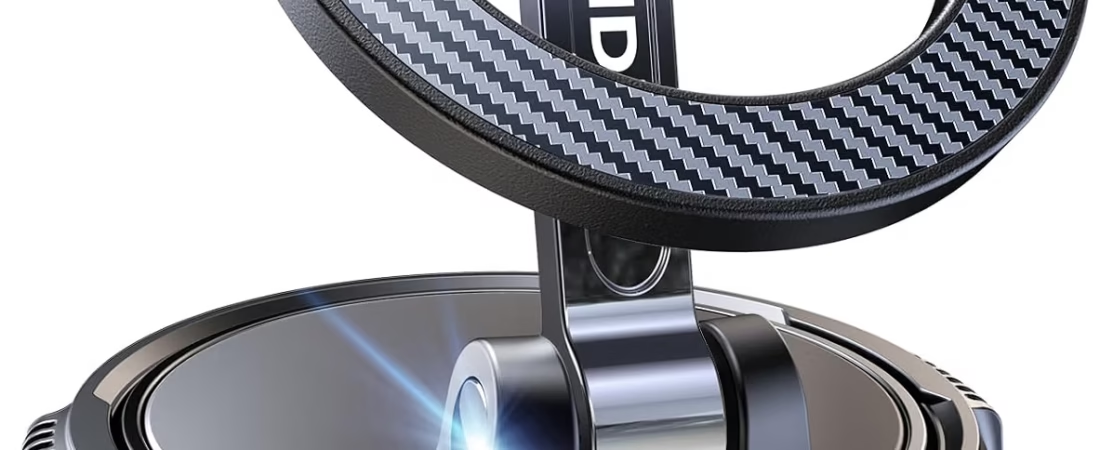
The ANDERY Car Phone Holder for MagSafe is designed around magnetic mounting and suction-based attachment. The product is described as featuring a strong suction base, a high-strength magnetic connection, 360-degree adjustability, and a carbon-fiber-style finish. It is marketed for compatible MagSafe-equipped iPhones and is intended for use as a dashboard or windshield-style car phone mount, depending on the mounting surface and installation method.
A car phone holder has a relatively simple job, but several factors determine whether it works appropriately in a particular vehicle. The surface where the suction cup is installed, the weight and case of the smartphone, the strength and alignment of the magnetic connection, temperature, road vibration, and the desired viewing angle can all affect the experience.
The numbers used in product descriptions—such as suction force measured in pounds or magnetic force measured in gram-force—also need to be understood correctly. Laboratory or manufacturer measurements do not necessarily represent the exact holding force experienced in every vehicle. A mount attached to a smooth, clean surface may behave differently from one installed on a textured dashboard or another unsuitable area.
This guide explores the design and practical use of the ANDERY MagSafe car phone holder, how magnetic and suction mounting work, what to consider when installing one, and how this type of mount compares with other common car phone holder categories.
What Is a MagSafe Car Phone Holder?
A MagSafe car phone holder uses magnets to connect a compatible smartphone or magnetic accessory to a mounting mechanism.
MagSafe is Apple’s magnetic accessory and charging ecosystem used on supported iPhone models and compatible cases. A magnetic car mount can take advantage of this connection to hold the phone without requiring traditional side clamps.
That changes the way the phone is installed and removed.
With a conventional spring-loaded phone holder, the user generally opens the side arms, places the phone inside, and releases the arms to secure it. A magnetic holder can allow a compatible phone to attach directly to the magnetic surface.
This can make one-handed mounting and removal more straightforward.
However, magnetic compatibility should not be assumed simply because a phone is made by Apple. The exact iPhone generation, case, magnetic ring, and accessory configuration all matter.
A phone case can also influence the connection. A case that is not designed to preserve a suitable magnetic interface may reduce the effective magnetic connection.
Key Features
Strong Suction Mounting
The ANDERY mount is advertised with a 78+ pound suction strength specification.
Such a figure describes the advertised holding capability of the suction mechanism under particular testing conditions. It should not be interpreted as meaning that a phone mount can safely support 78 pounds inside every vehicle.
Real-world suction performance depends on the mounting surface, cleanliness, temperature, moisture, installation technique, and other factors.
The practical purpose of a strong suction mechanism is to keep the mount attached to a suitable smooth surface while the vehicle is moving.
A good installation begins with surface preparation. Dirt, dust, oils, and uneven surfaces can interfere with suction.
Strong Magnetic Connection
The product is also advertised with a 2400gf magnetic force specification.
“gf” means gram-force, a unit used to express force. A 2400gf specification corresponds to a nominal force measurement of roughly 2.4 kilograms-force under the relevant testing conditions.
As with suction ratings, this number should be understood as a product specification rather than a guarantee of identical performance in every situation.
The actual connection can be influenced by the phone, case, magnetic ring, alignment, vibration, and distance between the magnet and the phone’s magnetic interface.
360-Degree Adjustment
The 360-degree adjustment allows the phone to be repositioned for different viewing angles.
This can be useful because drivers and passengers do not all sit at the same height or position.
A phone may need to be positioned vertically for certain navigation interfaces or horizontally when a wider display is preferred.
The ability to rotate the phone can also help reduce glare and improve visibility depending on sunlight and dashboard position.
The adjustment mechanism should be positioned before driving so that the phone does not need to be manipulated while the vehicle is moving.
MagSafe Compatibility
The holder is designed for MagSafe-compatible smartphones and accessories.
Magnetic mounting can be particularly convenient for users whose phones already support the relevant magnetic connection.
Before relying on the holder, users should confirm compatibility with their specific phone and case.
A phone that requires an additional magnetic ring may behave differently from a device with an integrated magnetic system.
Carbon Fiber-Style Construction
The product is described as having a carbon-fiber finish or design.
A carbon-fiber-style exterior can give the mount a distinctive appearance that fits certain vehicle interiors.
The visual finish is primarily an aesthetic consideration. It should not automatically be interpreted as evidence that every structural component is made from carbon fiber or that the mount has specific performance characteristics solely because of its appearance.
Adjustable Viewing Position
The combination of magnetic attachment and adjustable mounting hardware allows the phone to be positioned according to the vehicle’s interior layout.
This is particularly useful when the ideal location is not directly in front of the driver.
A good position should keep the screen visible without unnecessarily obstructing the road, instrument cluster, controls, vents, or other important parts of the vehicle.
How It Can Be Used
Navigation
Navigation is one of the most common reasons drivers use smartphone mounts.
A securely positioned phone can make turn-by-turn directions easier to see without requiring the driver to hold the device.
The phone should be positioned before starting the journey.
Voice navigation is also useful because it reduces the need to look at the screen repeatedly.
The mount itself does not make phone use while driving automatically safe or legal. Drivers should follow local traffic laws and use hands-free functions appropriately.
Hands-Free Calling
A mounted smartphone can be used with a vehicle’s Bluetooth system, speakerphone, or other hands-free communication features.
Keeping the phone in a fixed position can make it easier to interact with voice controls.
Drivers should avoid manually typing messages, browsing applications, or performing other distracting activities while the vehicle is moving.
Music and Audio Controls
A mounted phone can provide access to music, podcasts, audiobooks, or other audio applications.
For routine journeys, the phone can be configured before departure and then used primarily through voice controls or vehicle controls.
Road Trip Planning
During longer journeys, a passenger can use the mounted phone to help with navigation, route planning, or travel information.
A flexible viewing angle can be useful when the passenger needs to see the display without moving the mount itself.
Delivery and Professional Driving
People who use navigation applications as part of work may spend many hours in a vehicle.
A dedicated phone mount can provide a consistent location for the device.
Professional drivers should ensure that the mounting position complies with workplace requirements and local regulations.
Charging While Mounted
Whether a phone can be charged while mounted depends on the phone, cable arrangement, case, and mount configuration.
A magnetic mount is not automatically a wireless charger.
If charging is required, users should check whether their particular setup supports wired or wireless charging and whether the charging port remains accessible.
Cable routing should be planned so that it does not interfere with steering, gear selection, pedals, or other controls.
Choosing the Mounting Location
Where a car phone holder is installed can be just as important as the holder itself.
Dashboard
A dashboard location can provide a convenient viewing angle while keeping the phone relatively close to the driver.
However, dashboard materials vary.
Some dashboards have smooth surfaces suitable for suction attachment, while others have textured or porous finishes that may not create a reliable seal.
The manufacturer’s installation guidance should be followed when selecting the surface.
Windshield
A windshield can provide a smooth surface for suction mounting.
However, positioning the phone too high or in the driver’s direct field of vision can create a visual obstruction.
Local regulations may also restrict where windshield-mounted devices can be placed.
Drivers should choose a position that provides useful visibility without compromising their view of the road.
Other Smooth Surfaces
Some vehicles have smooth interior surfaces that may accommodate suction mounting.
Before installation, verify that the surface is appropriate and that the mount does not interfere with vehicle controls or safety equipment.
Preparing the Surface
Suction mounting depends heavily on surface condition.
Before installation:
- Select an appropriate smooth surface.
- Remove dust and debris.
- Clean away oils or residue.
- Allow the surface to dry.
- Position the suction cup correctly.
- Apply the mounting mechanism according to the manufacturer’s instructions.
- Check that the mount is secure before attaching the phone.
A suction cup placed on a dirty surface may gradually lose adhesion.
Extreme temperature changes can also affect suction materials and interior surfaces.
Understanding Magnetic Phone Mounting
Magnetic mounting relies on the interaction between the holder’s magnet and a compatible magnetic interface on the phone or case.
Alignment matters.
The magnetic rings used by compatible smartphones are designed to align with accessories in a particular position. If the connection is offset, the effective holding force can change.
The case also matters.
A thick case, incompatible magnetic ring, metal accessory, or other material between the phone and mount can affect the connection.
For reliable use, the phone should be attached according to the accessory manufacturer’s recommendations.
Who It May Be Suitable For
Drivers Using Compatible iPhones
People with compatible MagSafe-equipped iPhones may appreciate the convenience of magnetic mounting.
The phone can be attached and removed without adjusting traditional side clamps.
Commuters
Daily commuters may benefit from having a consistent location for navigation and hands-free functions.
A permanently installed mount can eliminate the need to reposition the phone at the beginning of every trip.
Road-Trippers
Long-distance travelers often depend on smartphone navigation.
An adjustable mount can make it easier to position the phone according to the driver’s preferred viewing angle.
Professional Drivers
Drivers who use authorized navigation or communication applications for work may find a dedicated mount useful.
The mounting position should be chosen carefully to comply with applicable workplace and traffic requirements.
Families Sharing a Vehicle
When multiple people use the same vehicle, adjustable mounting can make it easier to reposition the phone for different drivers.
The 360-degree adjustment provides flexibility without necessarily requiring the entire base to be moved.
Important Things to Consider
Verify Phone Compatibility
Compatibility is the first consideration.
Check the exact phone model and whether it supports the magnetic mounting system required by the holder.
The product listing references iPhone models and MagSafe compatibility, but buyers should verify the current compatibility information before relying on a specific device configuration.
Consider the Phone Case
A case can significantly affect magnetic mounting.
Cases designed specifically for MagSafe generally preserve the intended magnetic interface.
A thick or non-magnetic case may reduce the connection strength.
If a phone uses a separate magnetic ring, the quality and placement of that ring can also affect performance.
Suction Ratings Depend on Conditions
A stated suction force does not mean the mount will attach equally strongly to every dashboard.
Smooth, clean, non-porous surfaces are generally more suitable for suction cups than rough, textured, or porous materials.
Before driving, physically check the mount.
Temperature Can Matter
Vehicle interiors can become extremely hot or cold.
These conditions can affect adhesives, suction materials, plastics, electronics, and smartphone batteries.
Avoid leaving a phone in direct sunlight for extended periods when possible.
If the mount begins to loosen under unusual temperature conditions, stop using it until the installation can be checked.
Road Vibration
A car phone mount experiences repeated vibration and movement.
Road quality, vehicle suspension, mount position, phone weight, and other factors can influence stability.
A mount that feels secure while parked should still be checked periodically during use.
Avoid Obstructing the Driver’s View
A phone should never be positioned where it blocks a significant portion of the driver’s view.
Do not mount the device over important instruments or controls.
The ideal location differs between vehicles, so there is no single mounting position that works for every dashboard.
Keep Airbags in Mind
Airbag deployment zones should always be considered when installing accessories.
A phone mount should not be placed where it could interfere with an airbag or become a hazard during deployment.
Consult the vehicle owner’s manual if the location of an airbag is uncertain.
Do Not Adjust the Mount While Driving
The 360-degree mechanism provides flexibility, but adjustments should be made while the vehicle is stationary.
Even a quick attempt to reposition a phone can divert attention from driving.
Set the angle before departure.
Magnetic Mount vs. Clamp-Style Phone Holder
Traditional clamp-style mounts use physical arms to grip the sides of a phone.
They can accommodate a wider range of phones and cases because they do not depend entirely on a magnetic connection.
Their trade-off is that inserting and removing the phone generally requires manipulating the clamp.
A MagSafe magnetic mount can be quicker for compatible devices.
The main consideration is compatibility with the phone and case.
Neither system is universally appropriate for every user.
Magnetic Mount vs. Vent Mount
Vent mounts attach to the vehicle’s air-conditioning or heating vents.
They can be compact and avoid placing an accessory on the dashboard or windshield.
However, not every vent has the same structure or strength, and the phone’s position may be affected by the vent design.
A suction-based mount offers more freedom in selecting a suitable mounting surface but requires appropriate surface conditions.
Users should also consider whether placing a phone in front of a vent exposes it to excessive hot or cold airflow.
Magnetic Mount vs. Adhesive Mount
Adhesive mounts use a bonding pad to attach the holder to a dashboard or other surface.
They can provide a stable attachment when installed correctly, but removing the adhesive may be more difficult and can potentially leave residue or affect some surfaces.
A suction mount can be easier to remove and reposition when used on a suitable surface.
The choice depends on the vehicle interior and the user’s preference for permanent versus removable installation.
Magnetic Mount vs. Cup-Holder Mount
Cup-holder phone mounts use the vehicle’s cup-holder space as the attachment point.
They generally avoid windshield and dashboard installation concerns.
However, they can occupy a cup holder and position the phone lower in the vehicle.
A suction mount can place the phone closer to eye level, depending on installation.
Again, the appropriate category depends on the vehicle and the desired viewing position.
Keeping the Phone Secure
The strength of a phone mount is not determined solely by the magnet.
The entire system matters:
- Mounting surface
- Suction mechanism
- Adjustment joint
- Magnetic interface
- Phone case
- Phone weight
- Road vibration
- Temperature
- Installation quality
A strong magnet attached to a poorly installed suction cup does not create a secure overall mount.
Similarly, a strong suction cup cannot compensate for an incompatible magnetic connection.
This is why installation and compatibility are just as important as advertised strength ratings.
Practical Installation Routine
A simple routine can help maintain consistent use.
Before installation, clean the chosen surface.
Position the mount where it will not obstruct visibility.
Secure the suction base according to the instructions.
Adjust the viewing angle while the vehicle is parked.
Attach the phone and confirm that the magnetic connection feels secure.
Check that the mount does not interfere with steering, gear selection, climate controls, visibility, or airbags.
After driving over particularly rough roads, inspect the mount.
If the mount begins moving or the phone becomes unstable, stop using it until the cause has been addressed.
Protecting the Smartphone
The phone itself is another consideration.
A mounted phone can be exposed to sunlight through the windshield, and prolonged heat exposure can affect smartphone performance and battery condition.
Avoid placing the phone where it receives unnecessary direct sunlight.
If the device becomes unusually hot, remove it from the mount when safe and allow it to cool according to the phone manufacturer’s guidance.
This is especially relevant when using GPS navigation continuously because navigation applications can already increase processor activity and battery consumption.
Using a Phone Mount Responsibly
A phone holder can support hands-free use, but it does not eliminate driver distraction.
Navigation should ideally be configured before starting the journey.
Use voice guidance where appropriate.
Avoid manually entering destinations while driving.
Do not read or compose messages while the vehicle is moving.
If you need to make an adjustment, pull over somewhere safe and legal first.
Local laws differ, so drivers should follow the rules applicable to their location.
Frequently Asked Questions
What type of phone is this mount designed for?
The ANDERY car phone holder is designed around MagSafe-compatible smartphones and is marketed for compatible iPhone models. Exact compatibility should be verified against the current product listing and the specific phone and case being used.
Does the holder use magnets?
Yes. The product uses a magnetic mounting system intended to connect with a compatible MagSafe interface.
What does 2400gf magnetic force mean?
Gram-force is a unit of force. A 2400gf specification represents an advertised magnetic holding-force measurement under particular test conditions. Actual performance can vary depending on the phone, case, alignment, vibration, and other factors.
What does the 78+LBS suction specification mean?
It refers to the advertised suction holding capability under specified testing conditions. It should not be interpreted as meaning that the holder can safely support a 78-pound load in a vehicle.
Can the holder rotate?
The product is described as having 360-degree adjustment, allowing the phone to be repositioned for different viewing angles.
Can I use the mount with a phone case?
Compatibility depends on the case. MagSafe-compatible cases are generally designed to preserve the magnetic connection, while thick or non-magnetic cases may reduce holding performance.
Can I use it with a non-MagSafe phone?
The magnetic system is designed around MagSafe compatibility. A non-compatible phone may require a suitable magnetic accessory or adapter, if supported by the manufacturer. Compatibility should be confirmed before use.
Can the phone be mounted vertically or horizontally?
The adjustable design allows the phone to be repositioned into different orientations, provided the magnetic connection and mount geometry support the desired position.
Is the suction cup suitable for every dashboard?
No. Suction mounts generally perform better on smooth, clean, non-porous surfaces. Textured, porous, dusty, or heavily curved surfaces may not provide the same attachment conditions.
Can it be mounted on the windshield?
The product is marketed as a suction-style car mount, but users should verify the recommended mounting surfaces and installation instructions. If using a windshield, ensure that the position does not obstruct the driver’s view or violate local regulations.
Will the mount stay attached on rough roads?
No mounting system can guarantee identical stability under every road condition. Road vibration, phone weight, surface condition, and installation quality can affect stability.
Can I adjust the phone while driving?
Adjustments should be made while the vehicle is stationary. Manipulating a phone or mount while driving can create a distraction.
Does this mount wirelessly charge the phone?
A magnetic phone mount and a wireless charging mount are not necessarily the same thing. The holder’s magnetic connection does not by itself mean that it provides wireless charging. Check the product specifications for charging functionality.
Can it be used with different drivers?
Yes, the adjustable mounting mechanism can make it possible to reposition the phone for different drivers, provided the selected installation position remains appropriate and secure.
Should the mount be checked periodically?
Yes. Inspect the suction attachment, adjustment mechanism, and magnetic connection periodically, particularly after exposure to extreme temperatures or rough roads.
Where should I avoid installing a phone mount?
Avoid locations that obstruct the driver’s view, interfere with vehicle controls, block important instruments, or overlap with airbag deployment areas. Consult the vehicle manual when necessary.
Can heat affect the phone while it is mounted?
Yes. A vehicle interior can become very hot, particularly in direct sunlight. Smartphone batteries and electronics can be affected by excessive heat, so avoid unnecessary exposure and follow the phone manufacturer’s temperature guidance.
Conclusion
A dedicated car phone holder can provide a practical way to keep a compatible smartphone in a consistent position for navigation, hands-free communication, audio controls, and other appropriate driving-related functions.
The ANDERY Car Phone Holder for MagSafe uses a combination of magnetic attachment and suction mounting, with the product description highlighting a 78+ pound suction specification, 2400gf magnetic force, 360-degree adjustment, and a carbon-fiber-style appearance.
The magnetic design is particularly relevant for users with compatible MagSafe-equipped smartphones. Instead of relying on traditional side clamps, the phone can connect to the mount through its magnetic interface. This can make attachment and removal more convenient, while the adjustable mechanism provides flexibility when selecting a viewing angle.
The suction system is another important part of the overall design. Advertised holding-force numbers should be understood as specifications measured under particular conditions rather than guarantees of identical performance in every vehicle. Surface preparation, dashboard material, temperature, vibration, and installation technique can all influence how securely the mount remains attached.
Choosing the mounting location also requires careful consideration. A suitable position should provide useful visibility without blocking the road, instrument panel, controls, or airbag deployment areas. If the mount is installed on a windshield, local regulations and visibility requirements should also be taken into account.
The mount should also be considered as a tool for responsible hands-free phone use, not as permission to interact with a smartphone while driving. Navigation and other functions should be configured before the journey whenever possible, while manual adjustments should be made only when the vehicle is safely stopped.
For compatible smartphone users, a magnetic car mount can simplify the routine of positioning a phone in the vehicle. Its effectiveness ultimately depends on the entire setup: the phone and case, magnetic interface, suction surface, adjustment mechanism, vehicle interior, and driving conditions.
With appropriate compatibility checks and careful installation, a mount such as this can become a practical part of an organized in-car setup for everyday commuting, road trips, navigation, and other situations where keeping a smartphone securely positioned is useful.